

Description
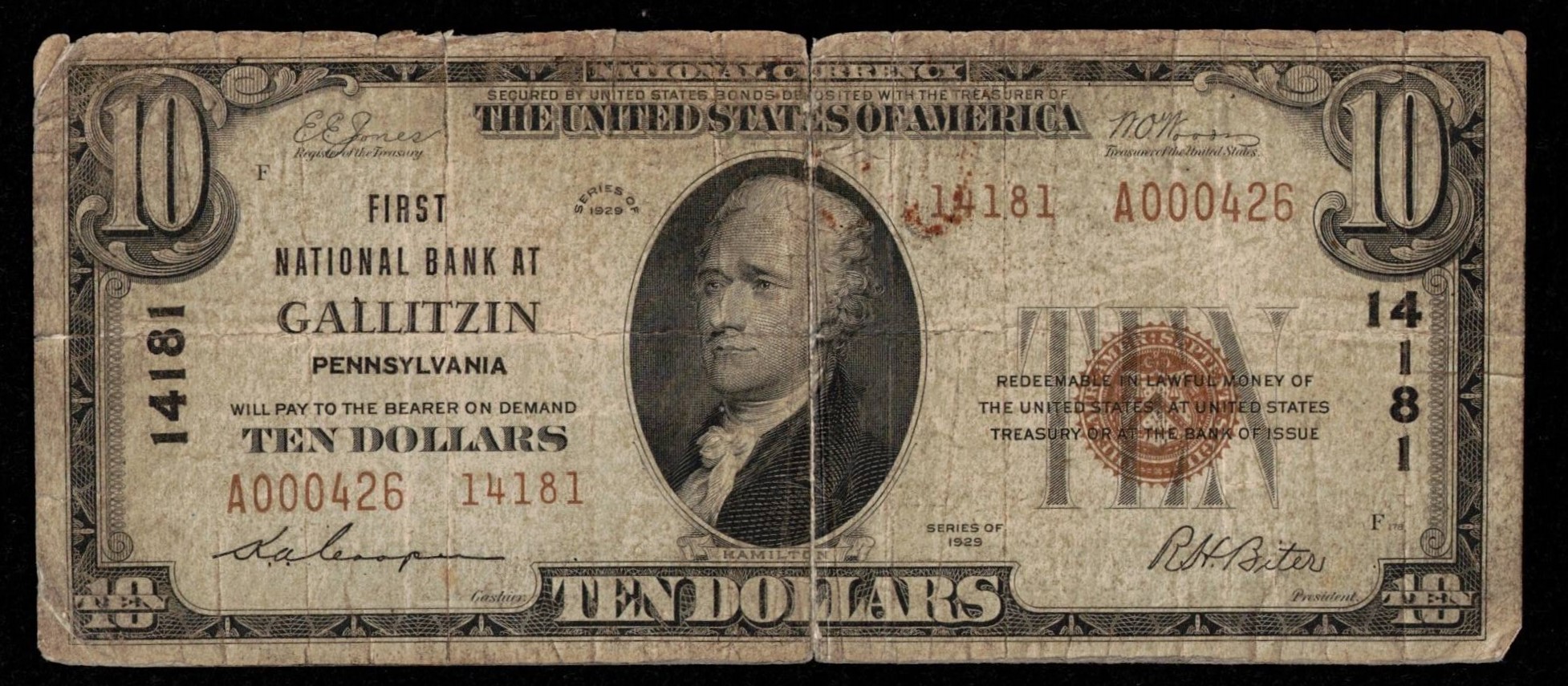
1929 Series $10 FIRST NATIONAL BANK OF GALLITZIN, PENNSYLVANIA. SERIAL A000426
CHARTER #14181 TYPE #2
One of #3 Small size known in the census for this Cambria County Bank. #0 Large Size.
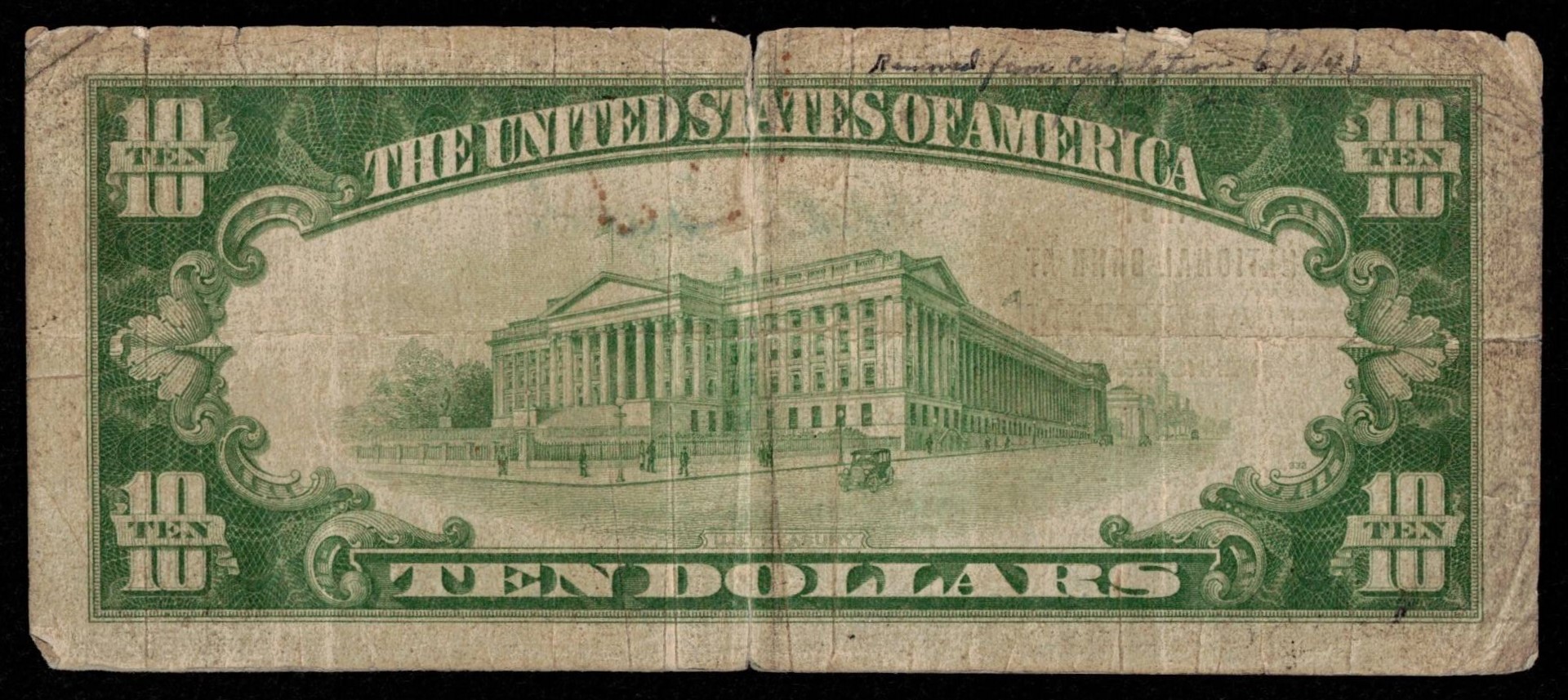
We graded this one as Very Good to Fine condition. It has some splits from wear and a pen ink notation on the back reading “pulled from circulation in 1943,” but it’s still intact with plenty of body left. This note would now be the third known in the census, alongside the only other two small-size notes—a $5 and a $20—both also graded VG. A rare national from the middle of the state, with just two others known and no large-size examples.
By the early 1700s, the Delaware people still living along the eastern seaboard were increasingly treated as bad or worse than slaves, and displaced clear across the breadth of Pennsylvania to beyond the Allegheny Front, where they settled along the rivers of Western Pennsylvania. One of their larger settlements, and closest to the gaps of the Allegheny, was the Amerindian town of Kittanning along the middle reaches of the Allegheny River. These towns would generally ally themselves with the French during the French and Indian War, causing settlers in central Pennsylvania to mount a guard and patrol on the gaps. By the late 1700s, the remnant Seneca and Cayuga that became known as the Ohio Iroquois or Mingo would have ranged the area, especially because they were known to make their towns along defensible hill tops and kept to the uplands. With iron and coal discovered west of the gaps, white settlers began traveling west through the area around the time the American Revolution came to a close. By 1824, the visionary Main Line of Public Works legislation had been debated and signed and the construction of the Allegheny Portage Railroad soon began aiming to connect Pittsburgh and the Ohio Country to Philadelphia by canals. In 1838, this plan was altered to incorporate the rapidly-developing and ever more capable railroad technology. In 1845, the Pennsylvania legislature required the new Pennsylvania Railroad to cross the mountains, and the surveyed route would create Gallitzin, which began life as ‘Summit Tunnel’.